On this page · 8 sections
- 01How ChatGPT search finds pages
- 02Let the right crawlers in: OAI-SearchBot and PerplexityBot
- 03Bing, Copilot and what's known about ChatGPT's search providers
- 04Perplexity: its own crawler and index
- 05Write for citation: specific answers, sourced numbers, clear dates
- 06Fresh content and fast re-crawls
- 07Brand mentions across the web
- 08How to check whether ChatGPT cites you
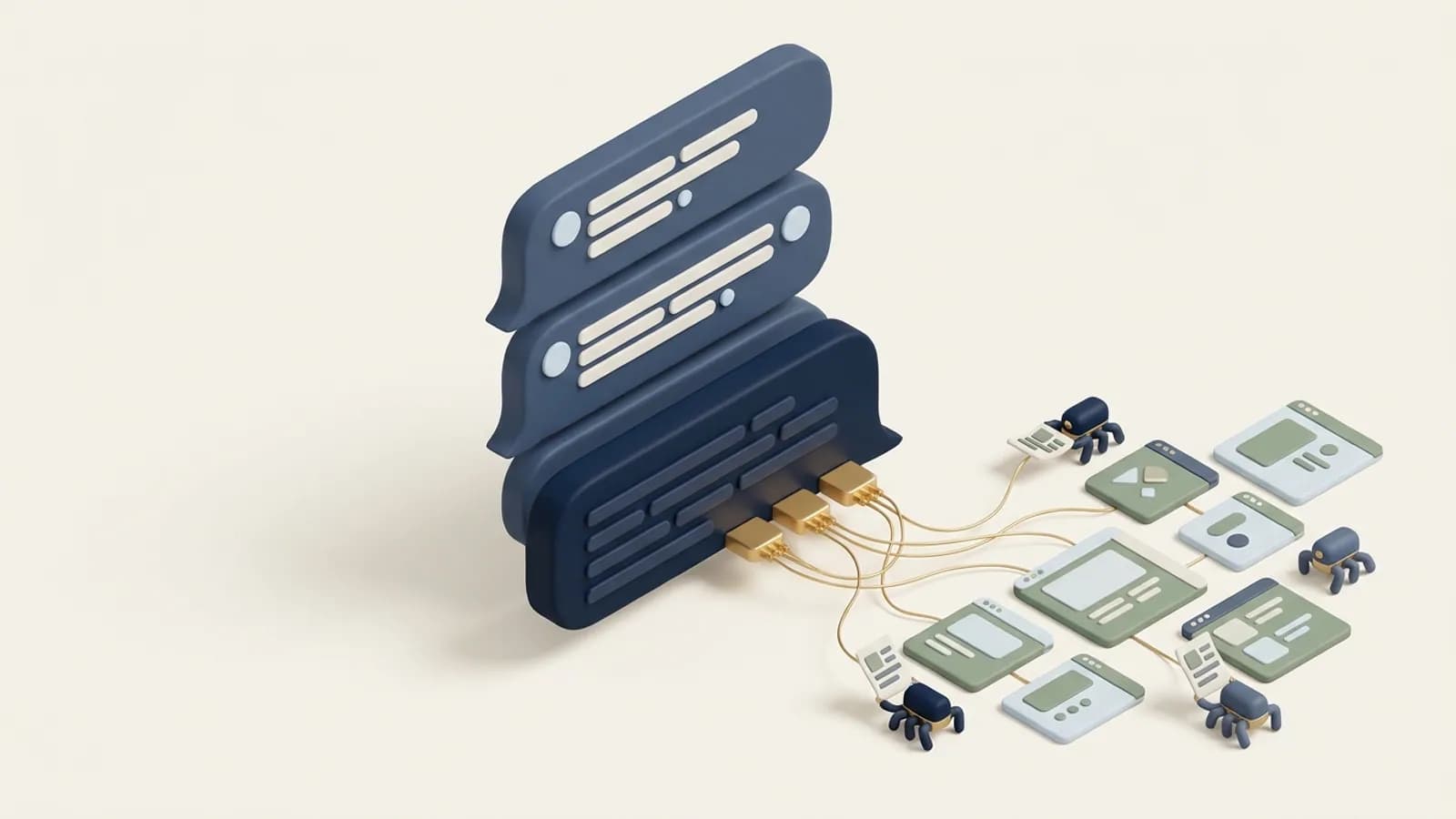
Every step matters because ChatGPT search answers are built from pages its systems have already fetched, so a page nobody has crawled, or an update nobody has re-crawled, can't be the version it quotes. This guide covers ChatGPT search and Perplexity, which work differently under the hood but reward the same habits.
How ChatGPT search finds pages
ChatGPT search finds pages through OpenAI's own crawler, OAI-SearchBot, plus results from outside search providers and content from publishing partners. When it launched in October 2024, OpenAI said "ChatGPT search leverages third-party search providers, as well as content provided directly by our partners" (OpenAI). OpenAI hasn't published how it ranks sources, how it picks citations or how it handles freshness.
What we do know points to a retrieve-then-write process: a prompt that needs current information triggers a search, candidate pages come from OpenAI's crawl and its providers, ChatGPT may read a page live with its user-triggered agent (ChatGPT-User), and the model writes the answer and links its sources.
So "how to rank in ChatGPT" really means two things: being one of the pages the model is shown, then being the one it quotes. Search ranking still drives the first part. A NeurIPS 2025 benchmark found that a document's position in the model's context, which traditional search ranking decides, mattered far more for citation than on-page "conversational SEO" tweaks (C-SEO Bench). Google's own guidance says optimizing for its generative AI search "is optimizing for the search experience, and thus still SEO" (Google Search Central), and the same fundamentals carry over to ChatGPT. For the full picture of where each engine gets its material, see how AI search chooses sources, and for the wider strategy, our AI search optimization guide.
Let the right crawlers in: OAI-SearchBot and PerplexityBot
OAI-SearchBot and PerplexityBot decide whether ChatGPT search and Perplexity can include your site at all. If robots.txt or your firewall blocks them, no amount of content work will get you cited.
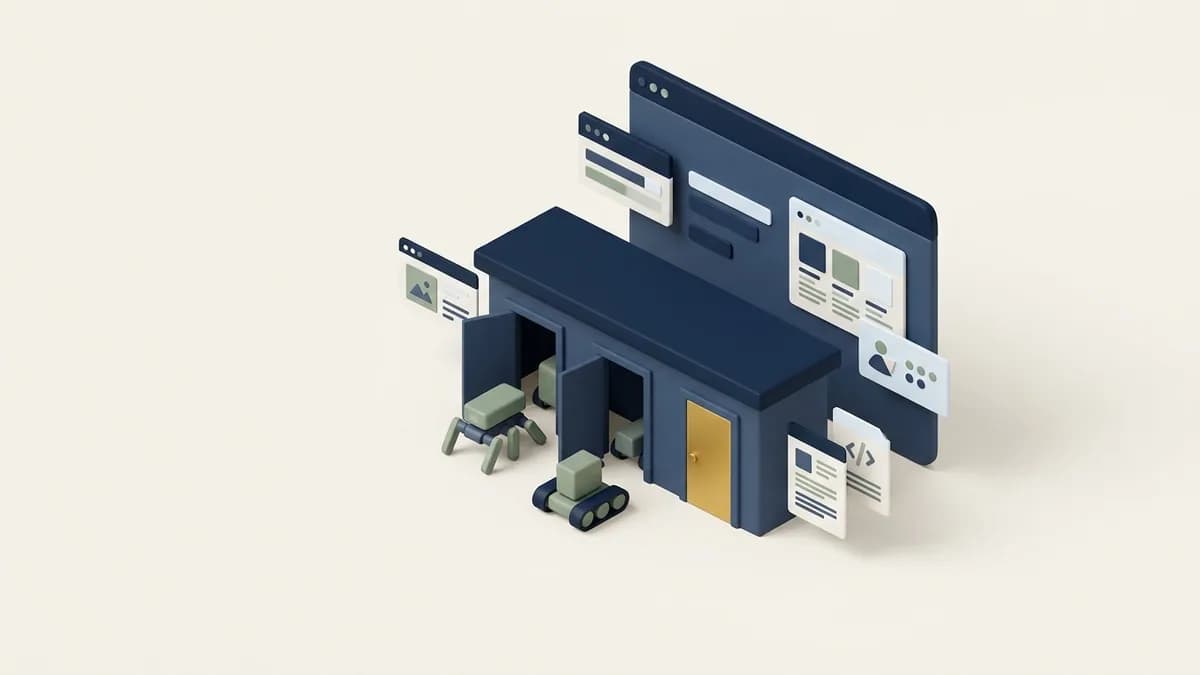
Each company runs more than one agent, and each agent has a different job:
Agent | Operator | What it does | What blocking it means |
|---|---|---|---|
OAI-SearchBot | OpenAI | "Used to surface websites in search results in ChatGPT's search features" | Your site "will not be shown in ChatGPT search answers," though it can still appear as a navigational link |
GPTBot | OpenAI | Crawls content "that may be used in training" OpenAI's generative AI foundation models | Signals your content shouldn't be used for training; search inclusion is a separate setting |
ChatGPT-User | OpenAI | Visits a page when a user's request triggers it; "not used for crawling the web in an automatic fashion" | "Robots.txt rules may not apply"; not used to decide search inclusion |
PerplexityBot | Perplexity | Surfaces and links websites in Perplexity search; not used to train foundation models | Perplexity recommends allowing it if you want to appear |
Perplexity-User | Perplexity | Fetches pages for a user's question; "generally ignores robots.txt rules" | Not a crawler you can manage through robots.txt |
Sources: OpenAI crawler docs, Perplexity crawler docs. Each OpenAI bot has its own guide: OAI-SearchBot, GPTBot and ChatGPT-User; the AI crawlers hub compares them with the rest. An llms.txt file doesn't change any of this; OpenAI's crawler documentation doesn't mention it. See what llms.txt does and doesn't do.
A robots.txt that keeps you eligible for AI search while opting out of model training looks like this:
robots.txt lines | Effect |
|---|---|
| Lets ChatGPT search crawl your pages |
| Lets Perplexity crawl your pages |
| Optional: opts out of OpenAI model training only |
Also check your firewall or CDN, since bot protection can block crawlers that robots.txt allows (both companies publish IP ranges you can allowlist). Allow about 24 hours for robots.txt changes to take effect, and keep your main answer in the page's HTML text rather than only in images, PDFs or scripts.
Bing, Copilot and what's known about ChatGPT's search providers
Bing indexing matters most for Microsoft Copilot: Microsoft says Copilot's web answers use the Bing search service (Microsoft Learn). For ChatGPT the picture is murkier. Microsoft announced in May 2023 that "Bing is coming to ChatGPT as the default search experience" (Microsoft), but that's a 2023 statement. OpenAI's current statements name only "third-party search providers," and OpenAI hasn't said whether Bing is still one of them.

Third-party estimates of how closely ChatGPT's citations follow Bing's results disagree sharply, so treat Bing as a possible input, not a confirmed pipeline. The Copilot link is clearer. Bing Webmaster Tools' AI Performance report, launched in public preview on February 10, 2026, shows how often your pages are cited across Copilot, Bing's AI summaries and "select partner integrations." It also lists a sample of "grounding queries," the phrases the AI used to retrieve the pages it cited (Bing Webmaster Blog).
Microsoft is also direct about speed. Its July 2025 webmaster guidance says "freshness signals directly influence how quickly updates are reflected in search results and AI generated answers." It recommends IndexNow, an open protocol that tells Bing and other participating engines when a URL changes, for real-time submission (Bing Webmaster Blog).
The gap is real for many sites. In a July 2026 vendor analysis of 38,412 Copilot answers for 612 B2B software and technology brands, MaxAEO found that 17% of the brands had at least one commercially important page indexed in Google but missing from Bing. In a small test on one site (40 pages submitted via IndexNow, 40 left to sitemap discovery), the same vendor saw a median of 9 days to a first Copilot citation versus 31 days (MaxAEO). That's one unreplicated test on one engine, so read it as a signal, not a benchmark.
What to do: verify your site in Bing Webmaster Tools, submit your sitemap, spot-check that your key pages are in Bing, and set up IndexNow so Bing hears about changed URLs. Our Bing IndexNow guide walks through setup.
Pair IndexNow with a Google push. IndexNow notifies Bing and the other participating engines, but it doesn't reach Google or Perplexity, so it only covers part of the picture. FreshlyCited's main job is Google: it helps your new and updated pages get found and indexed there, which makes them eligible for AI Overviews and AI Mode. For sites you verify by hosting an IndexNow key file, it also sends the changed URLs to Bing through IndexNow, free. Only URLs on that verified site are submitted. ChatGPT and Perplexity use their own crawlers and search partners. We don't submit to them, and we don't claim to.
Perplexity: its own crawler and index
Perplexity runs its own web index instead of borrowing Google's or Bing's, so Perplexity SEO is mostly about letting PerplexityBot in and being easy to discover. Perplexity says its index tracks "over 200 billion unique URLs" and that it uses machine learning to predict which URLs need indexing and when to schedule it (Perplexity). It also says its systems process "tens of thousands of index update requests" every second (Perplexity).
Perplexity isn't an IndexNow participant and offers no URL submission channel. That leaves the basics as your levers if you want to rank in Perplexity:
- Access. Allow PerplexityBot in robots.txt and at your firewall.
- Discovery. Keep a clean XML sitemap and link new pages from pages that already get crawled, such as your homepage, hub pages and recent posts.
- Mentions. Earn links and mentions on sites Perplexity already crawls often.
- Live reads. Perplexity-User can fetch a known page while answering, so an update to an already-known URL can surface without waiting for a full recrawl.
Write for citation: specific answers, sourced numbers, clear dates
Pages get cited when they answer the exact question in a passage the model can lift without rewriting, and back it up with specifics. A page that's vague, padded or hard to scan gives the model nothing clean to quote.
- Match the question. In an AirOps study of 548,534 pages ChatGPT retrieved (March 2026), pages whose titles overlapped the query by 50% or more were cited 20.1% of the time, against 9.3% for pages with under 10% overlap (AirOps). Kevin Indig's analysis of 815,000 query-page pairs found that "the 'ultimate guide' strategy produces worse citation results than a focused shorter page" (Growth Memo).
- Answer first. Put a one- or two-sentence answer directly under each question-style heading, and name the subject instead of writing "it" or "this."
- Add numbers, quotes and sources. In the original GEO study, adding quotations, statistics and citations raised a page's visibility in generative answers by roughly 30–40% on its benchmark (Aggarwal et al., KDD 2024). The tests used the researchers' own GPT-3.5-based engine plus a 200-query check on Perplexity, so treat the size of the effect as directional.
- Date your facts. Write "as of October 2026" next to prices, version numbers and statistics, and show an honest "last updated" date. Don't change the date unless the content changed. See content freshness for why fake freshness backfires.
- Use tables for comparisons. Pricing tiers, feature differences and specs are easier to quote accurately from a table than from prose.
Clear writing helps once your page is in the candidate pool. Getting into that pool is still a search problem.
Fresh content and fast re-crawls
Fresh content helps with ChatGPT citations only once the update has been crawled. Until a crawler fetches the new version, search indexes and AI answers keep working from the old one. In short, AI answers cite what's been crawled, and they lean toward pages that are kept current.
The vendor data leans toward recently updated pages, with caveats:
- Ahrefs (July 2025, about 17 million citations). ChatGPT showed the strongest preference for fresh content of any engine studied. Its citations averaged 958 days since publication, about 458 days newer than Google's organic results (Ahrefs).
- SE Ranking (November 2025, 216,524 pages). Pages updated in the past three months averaged 6.0 ChatGPT citations versus 3.6 for outdated pages. Brand-new pages also averaged 3.6, and referring domains predicted citations more strongly than freshness did (SE Ranking).
The pattern is "established pages that are kept current," not "new pages win." For SaaS teams that means pricing, comparison and integration pages, and the changelog: see ChatGPT visibility for SaaS.
The other half is getting each update seen. Google says crawling "can take anywhere from a few days to a few weeks" (Google Search Central). Bing accepts IndexNow notifications. FreshlyCited's smart push covers the Google side: it checks which of your updated URLs Google has already indexed, pushes only the ones it hasn't, and re-checks them, and for sites with a verified key file it also sends them to Bing through IndexNow. For an updated page Google already has, Refresh anyway sends it for 1 index credit, with no credit back. It doesn't submit anything to ChatGPT: OAI-SearchBot decides when to come back. Whether any engine cites a page still depends on quality, relevance and authority.
For context, a vendor study of 740 new pages across 132 brands (February–May 2026) found a median of 4 days to a first Perplexity citation and 11 days in ChatGPT search. Only 24% of first citations were still there 30 days later, and strong domains moved faster (MaxAEO).
Brand mentions across the web
What other sites say about you shapes ChatGPT's answers as much as your own pages do. A 2025 University of Toronto preprint found AI search shows a "systematic and overwhelming bias towards Earned media." For US software queries, 72.7% of citations from the AI search setup it tested (a web-enabled GPT model) came from earned media, against 45.4% on Google (Chen et al.).
Authority shows up in the citation counts too. In SE Ranking's ChatGPT model, sites with more than 350,000 referring domains averaged 8.4 citations, against 1.6–1.8 for sites with up to 2,500 (SE Ranking). That spread is wider than any freshness gap the study measured.
To build that presence, get listed accurately in the directories, review sites and roundups your buyers read, pitch data and expert commentary to publications in your category, and keep your one-line company description the same everywhere. Then check that the pages mentioning you are indexed. A mention on a page no search engine has crawled can't count.
How to check whether ChatGPT cites you
You check ChatGPT citations by running a fixed set of prompts on a schedule. Answers vary with wording, location and time, so a single check only gives you a snapshot.
- Build a prompt set. Write 20–50 questions your buyers actually ask, mapped to the pages you want cited.
- Run the prompts in ChatGPT with search on. For each prompt, record whether you were cited, whether you were mentioned, and which URL was linked. Run the same set in Perplexity.
- Repeat every week or two and watch the trend. Citations come and go, so judge the direction over several runs, not one result.
- Check analytics. Look for referral sessions from chatgpt.com and perplexity.ai.
- Add Bing's AI Performance report. It covers Copilot and Bing's AI summaries directly.
- When a page isn't cited, check access and indexing first. Is OAI-SearchBot allowed? Is the page in Bing and Google? Has the current version been crawled?
Our guide to how to track ChatGPT citations covers tools and a weekly routine.
Step 6 is where most invisible pages are found. FreshlyCited covers the Google part of it: paste your pages, or the third-party pages that mention you, into a visibility check to see which ones Google has indexed, push the invisible ones and get a re-check you can share with your team or client. We don't submit to ChatGPT or Perplexity, and we don't claim to. Check your own links free.

Written by